
- This event has passed.
Lessons From The Edge: Crisis Survival Skills For Coronavirus
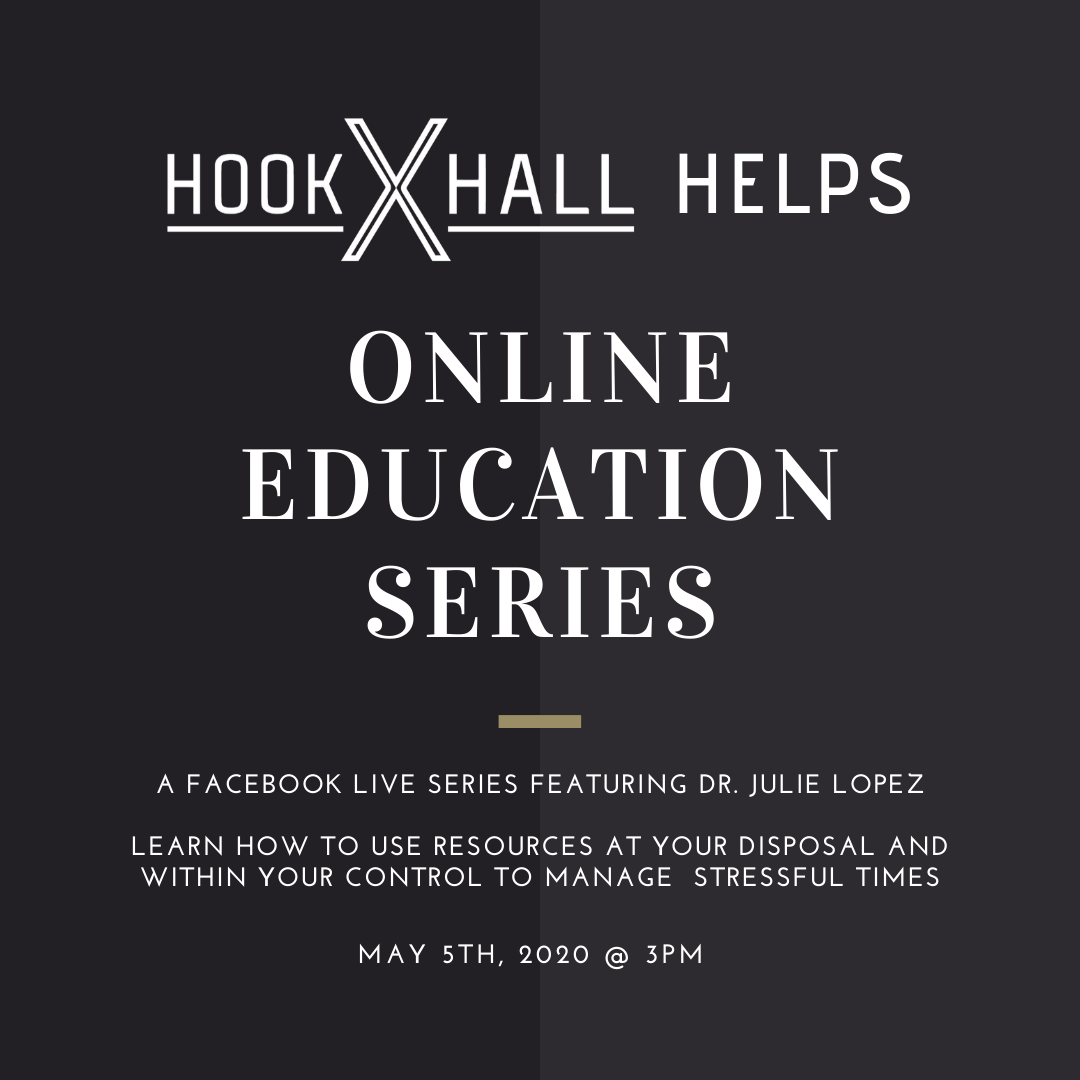
Dr. Julie Lopez is a featured speaker in ‘Hook Hall Helps: Online Education Series’.
The objective of this training session is to empower participants to learn about how to resource their body to maximize resilience and tolerance for very challenging times.
What are the most important things that attendees will learn?
1. Mental health symptoms one might experience that are NORMAL during this time.
2. Exercises to expand core crisis management skills such as self soothing, processing, expression, acceptance and adaptation.
3. Resources that support building well-being and resiliency.
Why are these concepts and skills important to those in the hospitality industry?
The hospitality industry is in a crisis. A prominent chef predicts a 75% failure rate due to the economic fallout from coronavirus. This indicates an over stressed industry due to job loss and severe industry recession. For many, this experience sets off normal basic survival instincts that can have negative effects on everyday well being. Some symptoms that a person in distress might be experiencing are headaches, body aches, gastrointestinal problems, mood struggles like anxiety and depression, sleep disturbances, nightmares, insomnia, lethargy, irritability and more. Our bodies are built to survive and a combination of understanding how our bodies work, along with simple tools to effect change in our felt experience can have a profound effect on day to day well being.
The Session is broken down into 3 parts:
Part A: An overview of the body in crisis – why this may be happening for you at this time, and the dynamics and factors at play that may be sending off danger signals to your human system.
Part B: A few experiential exercises to specifically help your system downshift your nervous system – built to empower the listener bc exercises can be done anytime.
Part C: A resource review of The Resilient Brain Project.
Upon the completion of this training session attendees will be able to:
1.Normalize and have compassion for themselves or loved ones experiencing symptoms of distress
2.Better self soothe and self regulate during moments of distress
3. Understand how to access resources in The Resilient Brain Project
To learn more about this subject, attendees can find information here:
1. www.resilientbrainproject.com
2. https://www.redcross.org/get-help/disaster-relief-and-recovery-services/recovering-emotionally.html
3. www.vivpartnership.com (especially the growing free video section)
–
Missed the live showing? Watch the recorded series session here.


